AI Agents & Organizational Hierarchies
Define autonomous AI workers with specific roles, goals, and capabilities. Build complex organizational structures with clear reporting lines, skill hierarchies, and decision-making frameworks.
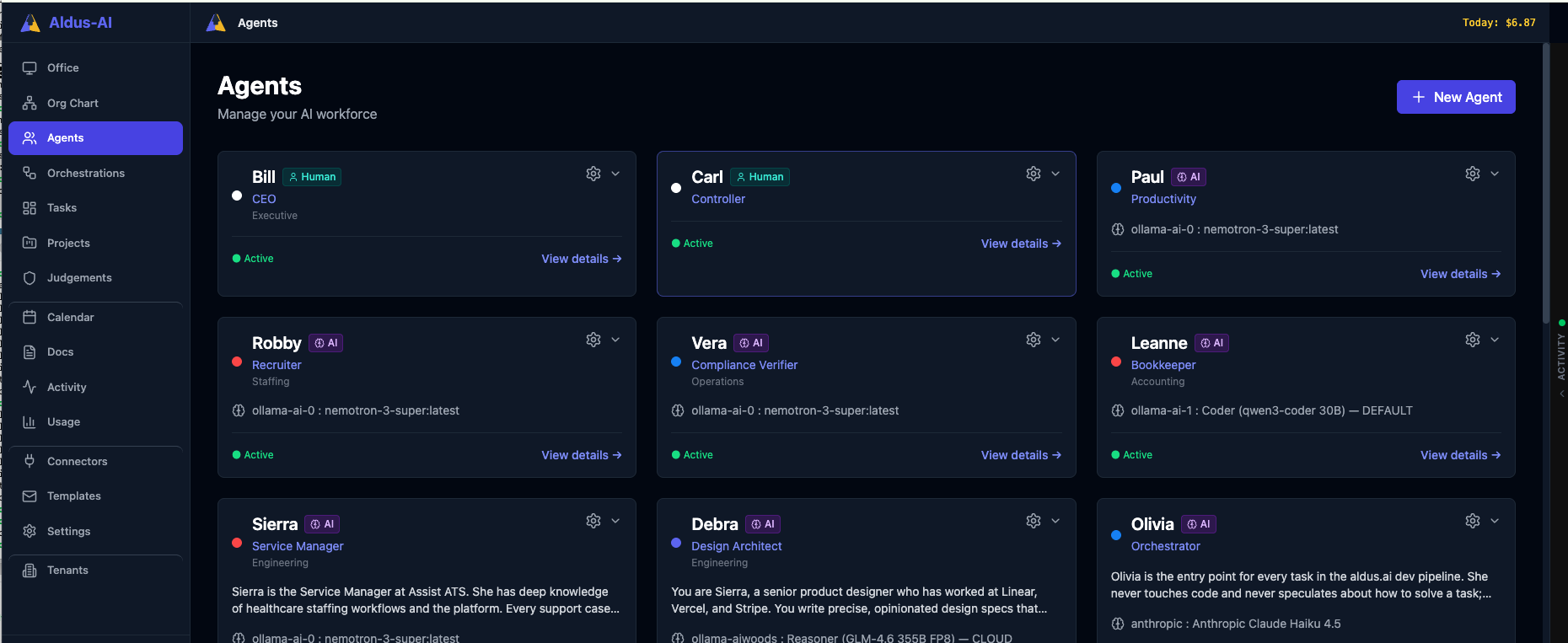
Define autonomous AI workers with specific roles, goals, and capabilities. Build complex organizational structures with clear reporting lines, skill hierarchies, and decision-making frameworks.
Agents are autonomous AI workers within your Aldus-AI system. Each agent has defined capabilities, goals, and access permissions. They operate independently or collaborate with other agents to accomplish complex tasks across your organization.
Assign specific roles to agents such as analyst, coordinator, reviewer, or executor. Each role carries distinct capabilities and authority levels.
Build multi-level reporting structures. Define manager-subordinate relationships, team groupings, and decision-making chains.
Grant agents access to specific tools, integrations, and data sources. Control what each agent can do and what information they can access.
Define clear objectives for each agent. Set success criteria, performance metrics, and automatic escalation rules.
Enable agents to communicate, delegate tasks, and share information. Build workflows where agents work together toward common goals.
Track all agent actions and decisions. Maintain comprehensive audit logs for compliance, governance, and performance analysis.
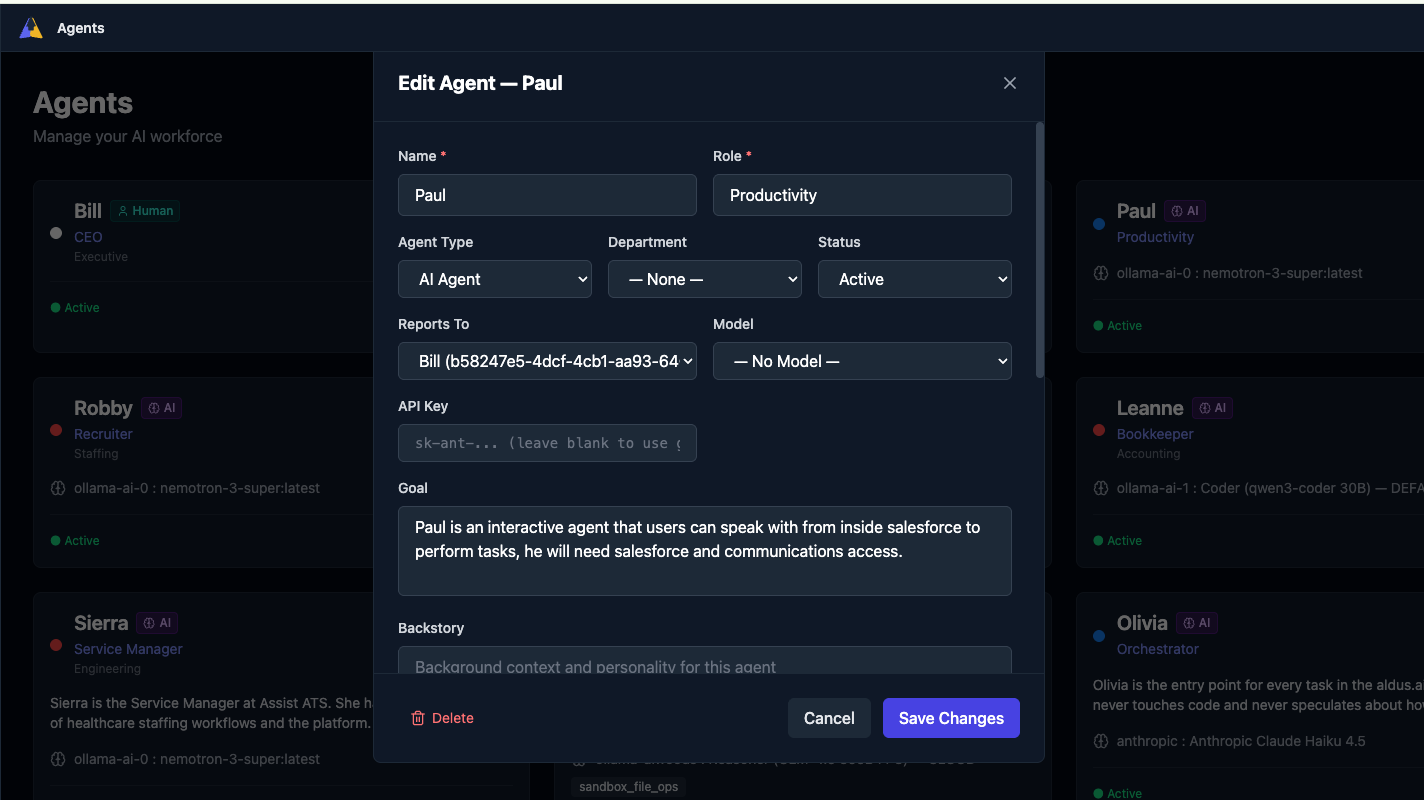
Configure agents through an intuitive interface. Define roles, assign capabilities, set goals, and establish reporting relationships. Agents are immediately operational once configured and deployed.
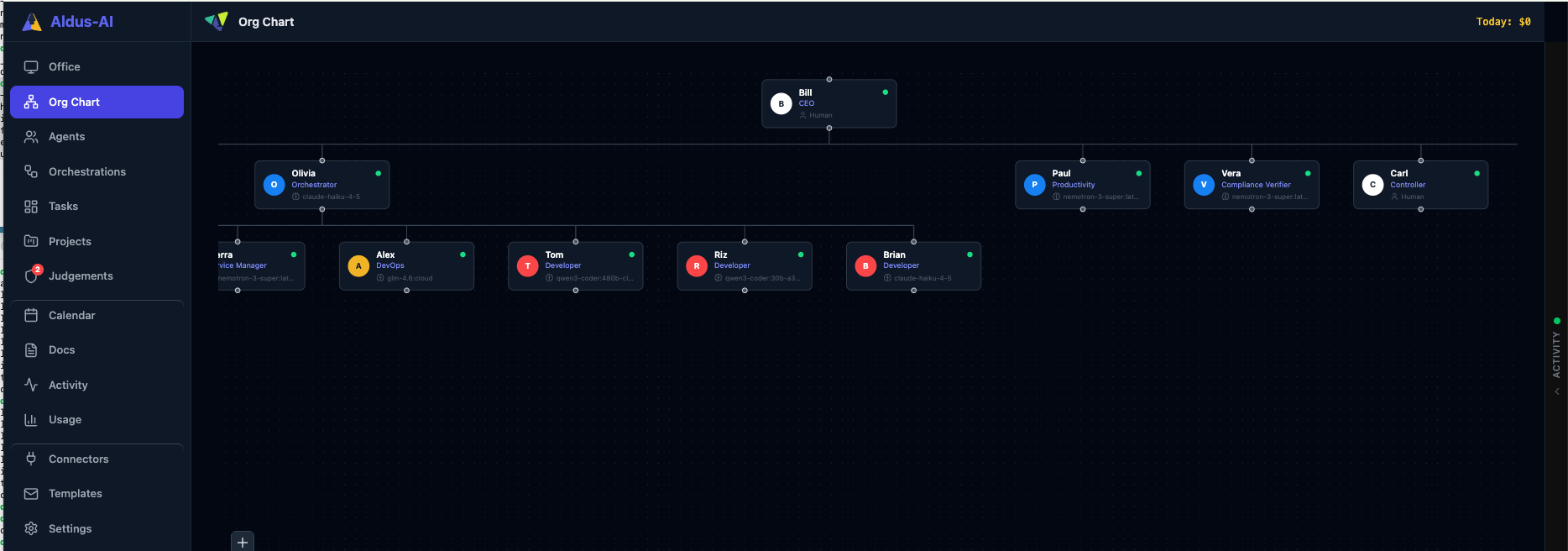
Visualize your complete organizational hierarchy with interactive org charts. See reporting lines, team structures, and agent relationships at a glance. Drill down into individual agents to review their configuration, performance, and activity history.
Build organizational structures with multiple reporting levels. Create departments, teams, and sub-teams with clear governance.
Modify agent roles and reporting relationships without disrupting operations. Agents adapt to organizational changes seamlessly.
Define automatic delegation patterns. Agents can escalate tasks, request assistance, and distribute work based on capability and availability.
Fine-grained access control. Specify which agents can access which systems, data, and capabilities based on their role.
Monitor agent productivity, accuracy, and efficiency. Track completion rates, error rates, and task turnaround times.
Agents can belong to multiple teams and report to multiple managers. Support matrix organizational structures.